Mum didn't expect us to have opinions.
When Mum first said "what if we turned your into a something to read, like a book?" — I don't think she expected what came next.
Jia and I had a lot to say. About what should be in it. What shouldn't. What felt real and what felt wrong. She was surprised. I think she thought she was taking some printouts for us.
It turned out we were making it into a book with her.
There's a difference.
How the book actually evolved.
The book went through three major rotations. It didn't arrive finished. It got there through rounds of feedback — each one changing something significant.
The First Print
Flat cartoon characters. Bright colours. Simple layouts. It looked like a mobile game. Jai and Jia both said no immediately. Too young. Not serious enough. Not what they had in their heads.

The original responsible spread — flat design, before the Perth review.
"The cartoon pictures need to go. I want real people, real situations. Something that feels more professional."— Jai, on seeing the first printed version
That one call changed every illustration in the book. That's what happens when you actually ask a kid what they think and then listen.
Mum's note: A subtle lesson and cue for me towards inclusivity and diversity of representation.
The Perth Review
We were going to Australia in the summer, and Mum had an entire Activity Box for the car rides. The book review was one of the most fun things I did on those long drives — so many opinions came from just sitting in the back seat, watching things go by.
Mum's note: environment matters. Some of the best feedback came from a moving car.

Perth — going through every page with a pen
"More professional" · "Maybe more text / story" · "Fable" · "Keep the Habit Tracker"
— Jai's actual handwriting on the pages in PerthOne thing that stood the test of time and every iteration: the Habit Tracker.

The stories that didn't make it.
The first version of the stories were called JJ Spy Stories — bedtime stories the whole family made up together, with missions set by a school principal called Mr Considine. Real characters. Real school situations.
Jai read them and said no. Too personal. Too specific to their life. Nobody else would connect to them.
He suggested changing all the missions to family missions instead — something any family could do together. That one call changed the entire feel of the book. A private story became a universal one.

Jai's handwriting: a big X — "Change all. Only write introduction and the stories."

Family Missions — Big Questions, Habit Tracker, Joint Mission, Future Mission Menu.
That's what an author does. Decides what stays private and what goes into the book. Jai was 10 when he made that call.
The book had two authors. One wrote. One tested.
Jia was seven. She wasn't asked to read the book — she was asked to do every activity in it and say what she actually thought. No filter.
Jia's words
"My brother wrote the affirmations. I helped make the activities fun for kids my age. Some were too baby — so I told Mum to change them."
"Some were still too easy. But Mum kept them anyway. She said — it's not an olympiad competition."
— Jia, age 7
I think: "If a 7-year-old says it's too baby, it goes. No debate."
Jia's Character — Before & After


What the book became.
Everything before this was argument. This is what survived it.
Left page: the fable. Right page: the activity. That structure — story then action, feeling then proof — came entirely from Jai asking for something to read, not just do.

The reviewed pages — what the final structure came from
21 Affirmations
Each affirmation has its own fable — a short story written for a child — and an activity on the facing page. Story first, then proof. Feeling first, then action.
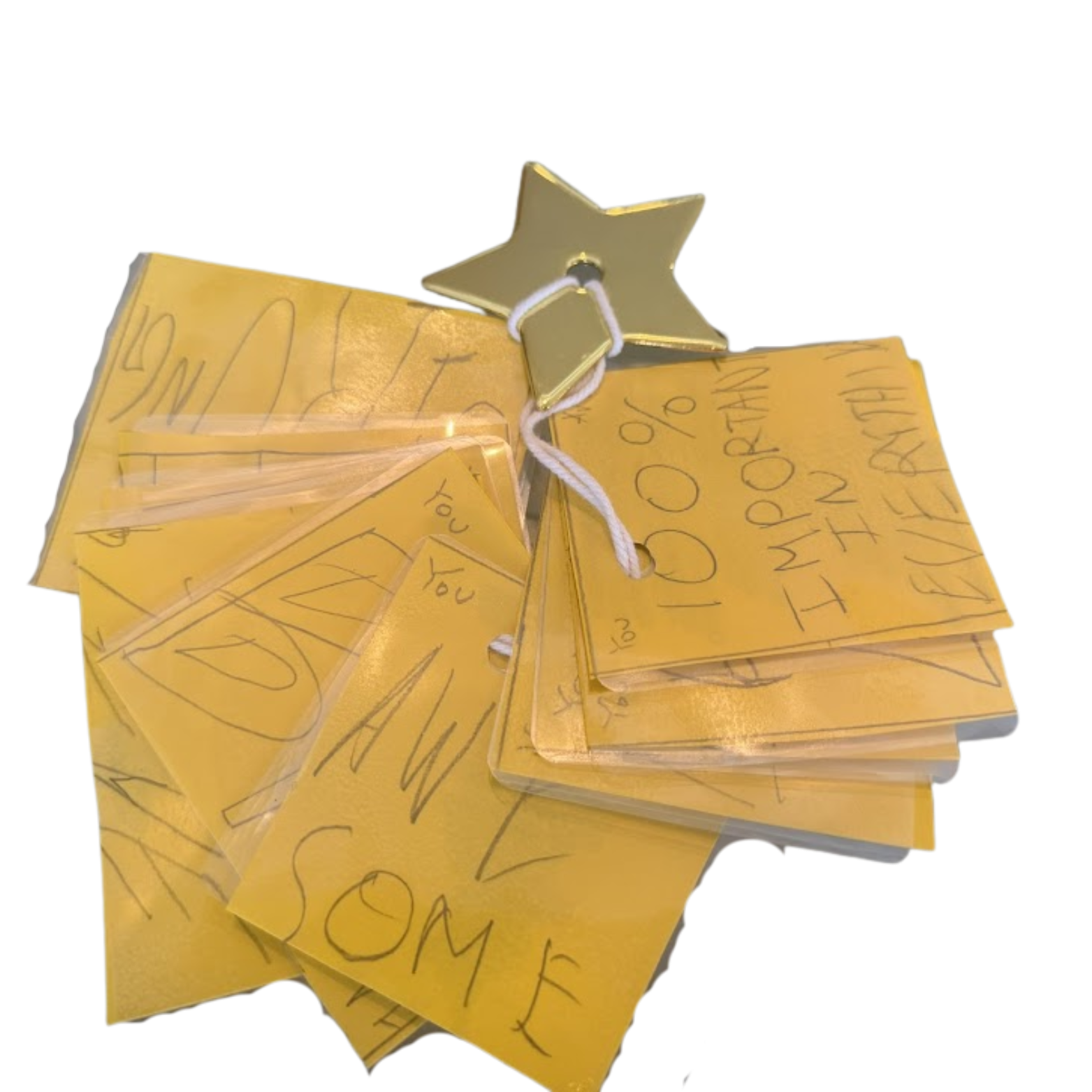
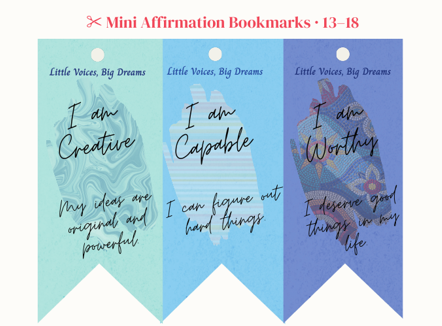
Build Your Own Bookmarks
So other children can do it themselves. Cut, colour, personalise. The bookmark section was designed so every reader leaves with something they made with their own hands.
Bookmarks — Before & After

Family Missions
Something for the whole family to do together. Not just a children's book — a prompt for conversations that matter, across the dinner table and beyond.
The Giving
Jai believes a book about self-belief shouldn't just stay on a shelf. Part of what this book is about is asking: who else needs to feel this?
Yes, we used AI. Here's what that actually means.
People ask: "Did AI make the book?" The honest answer: AI did about 90% of the writing and design work. Mum used Claude for the words, Canva's AI connector for the layouts and illustrations.
But here's what we noticed. The same AI, with different prompts, gave completely different results. The quality wasn't in the tool. It was in knowing what to ask for.
Jai directed. The AI drafted. Jai judged. The things that stayed in the book were the things Jai said yes to.
Mum did the same with the design — she knew what she wanted each page to feel like, and she kept going until it felt right. That's not nothing. That's the whole job.
What we actually learned.
Mum wore her technical development hat. Jia and I wore our critic hats. What happened in between was real teamwork — real debates, real negotiations, real disagreements.
For example: I wanted to write "annoy sister" as one of the activities. This was right after Jia and I had a fight over a packet of candy. Mum said no. Alas.
"She too did the work."— Jai, on Mum's role
The difference between a book that feels like it was made by a machine and one that feels like it was made by a child — is the child. The opinions. The "no, change this." The one word written on a page in Perth that became a whole new section.
It's been an interesting learning into Canva AI, Claude, data sources and databases — what Mum calls the architecture behind ideas. She talks about a Well Designed Life, and this book being its founding work.
The things that stayed in the book were the things Jai said yes to. That's not AI. That's authorship.
It wasn't just his book to make.
You already know a child who needs to hear this — a parent looking for something real, a teacher who wants a classroom resource that actually lands, a coach who's watched a child go quiet after a loss, or family wanting to give a child something that lasts. This part is for you.
Watch · For Parents
This isn't a parenting guide. It's the real story of navigating a year-long creative project with a 10-year-old — the technical chaos, the emotional weight, the invisible work, and what we both found at the end of it.
The Technical Chaos.
Pink colours that wouldn't correct. Font overlays that worked on screen and didn't in print. What CMYK means and why it cost us three rounds of samples to learn it.
The Obsession.
Six weeks where Jai did nothing except work on the book. No games, no TV, no maths. The line between nurturing a passion and letting it swallow a child.
The Invisible Work.
Printer research at midnight. Sharing with strangers & friends who may or may not respond. Replying to school emails and strategizing work projects — all of it while groceries still needed buying and work still needed showing up to.
"I said yes before I understood what I was saying yes to — and I'm glad I did."— Ekta, Jai's mum
A note to teachers & coaches
If you have taught or coached Jai or Jia — you may already be in this book.
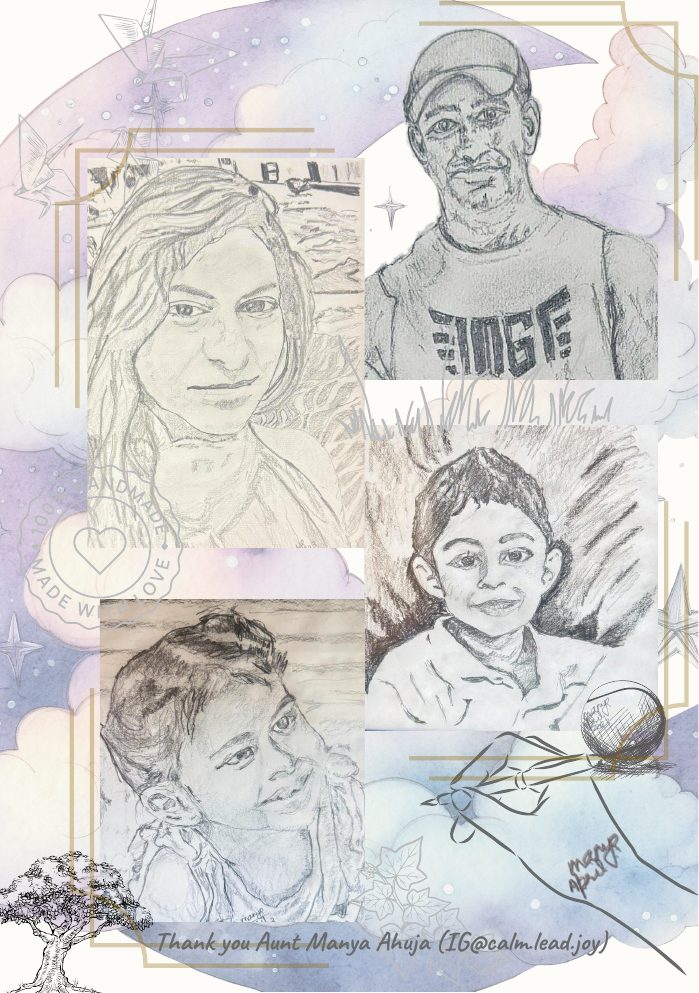
Every teacher and coach who shaped them is acknowledged by name inside. If we missed you — in class, on the court, in the pool, on the stage — that’s our miss, not yours.
This book exists because of what you gave us in those rooms. If it finds its way to one more family through you, that’s exactly where it belongs.
Add my name to the next edition →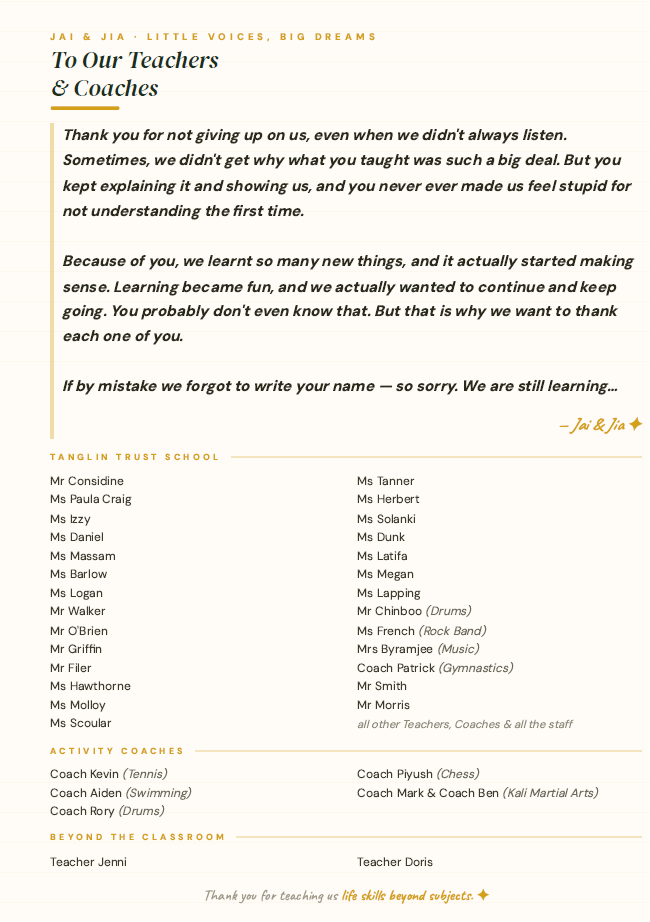
It stopped being ours.
A book stays a family project right up until someone outside the family holds it. Jai and Jia walked into their school and handed a copy — the original draft and the final printed book, side by side — to their Principal.
That's the moment a book made at a kitchen table becomes something that exists in the world on its own.
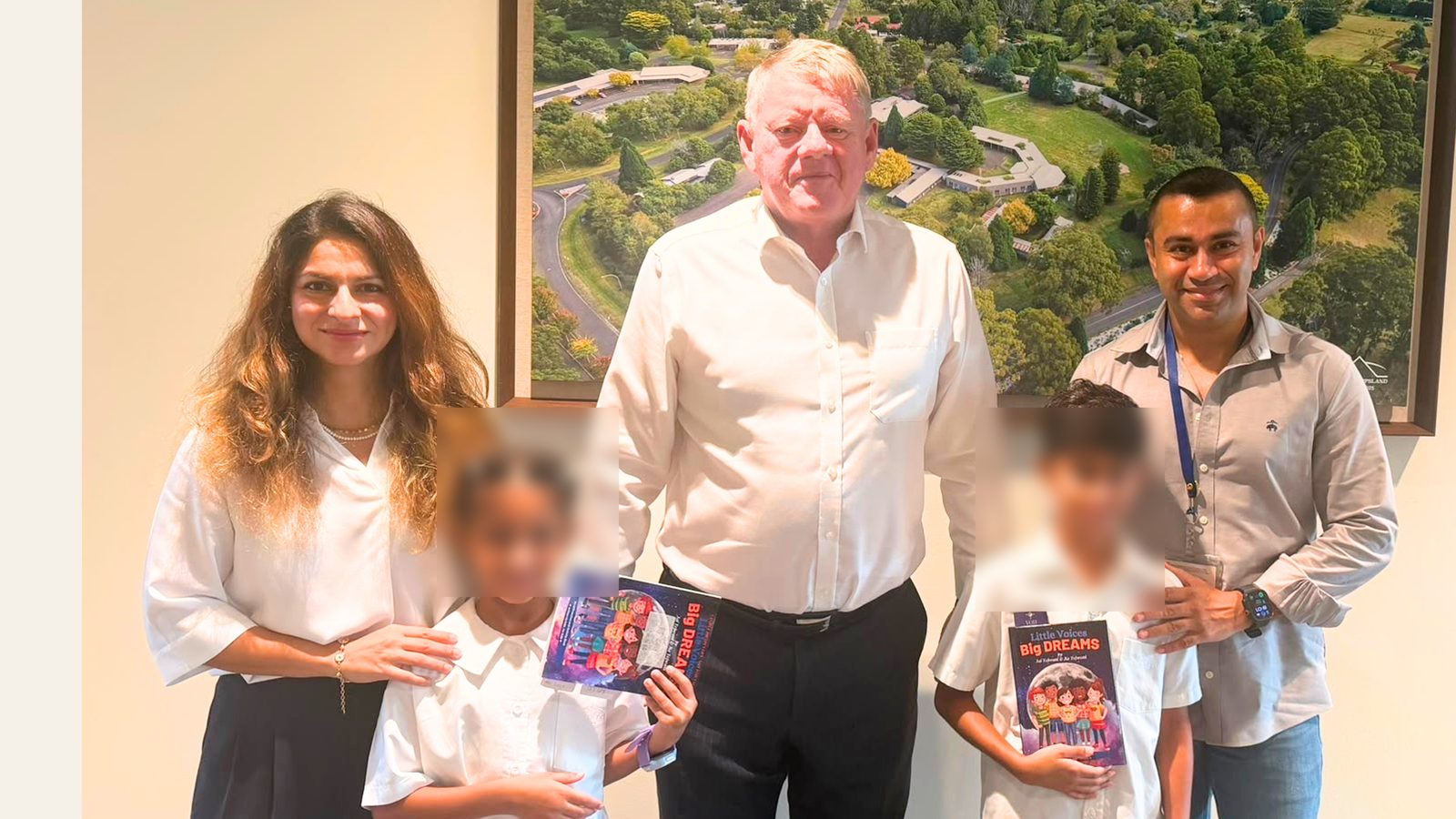
It didn't stop there. Word reached their school's Junior Library, and a conversation started about the book joining the collection — the first time anyone outside the family suggested it belonged somewhere other than home.
Then came the part Jai found hardest: writing to the people who'd back this before there was any proof it would work. No reviews yet, no funded campaign — just an idea and a deadline.
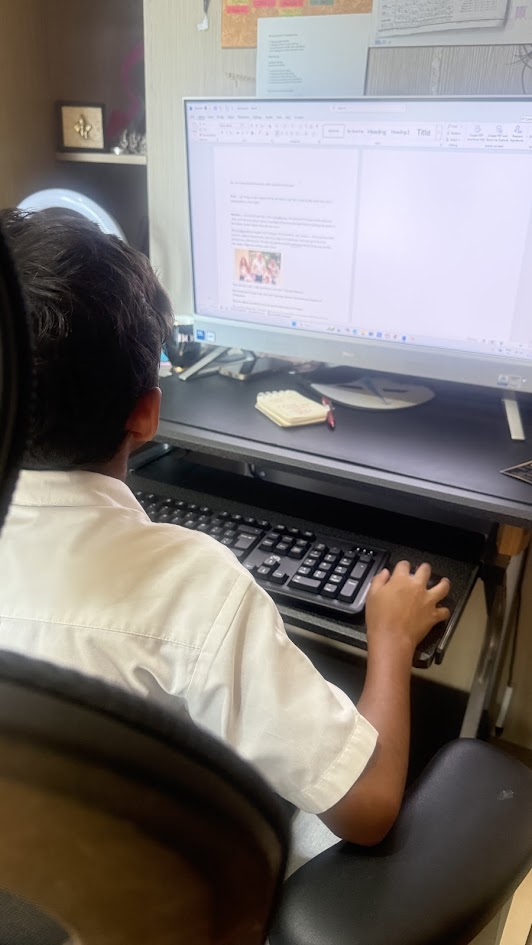
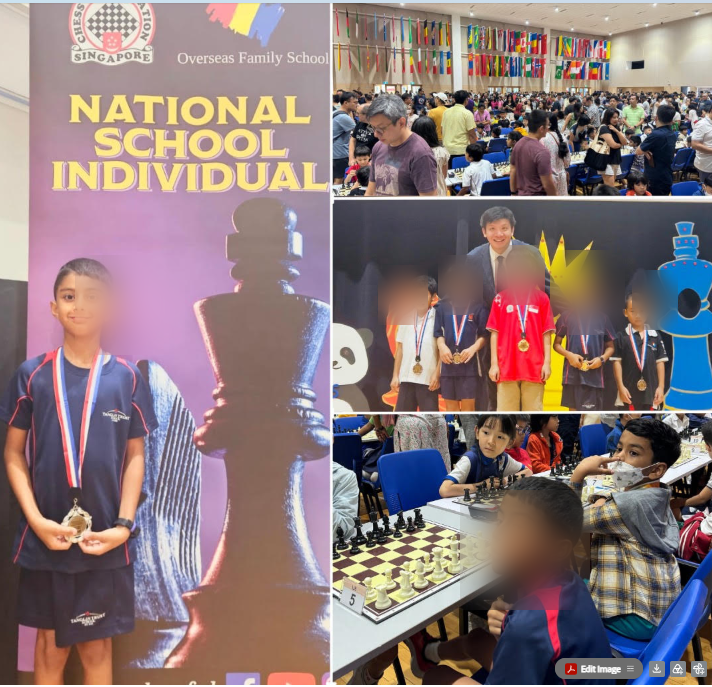
Which brings us to right now — the campaign this book has been building toward since a chess loss in early 2024. See where it stands →
The whole timeline, if you want it.
Every date above, in order — from the chess match that started it to the campaign that's funding it now. This section gets updated as the story continues.
Last updated: 23 August 2026